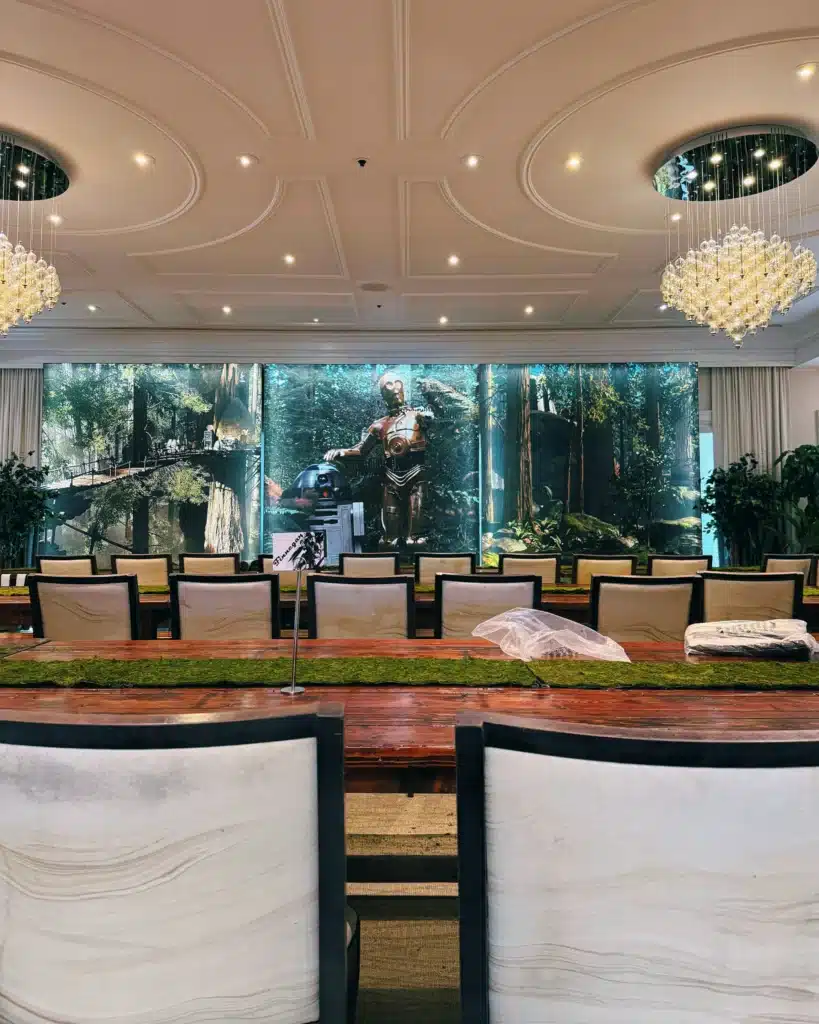
Warm light can feel inviting; softer illumination can encourage conversation; focused light can draw attention to a stage; and bold or dynamic lighting can energize a celebration.
With thoughtful event lighting, the same room can feel warm and welcoming during arrival, relaxed during networking, refined during dinner, focused during presentations, and energetic when the celebration begins. The walls, furniture, and floor may stay the same. What changes is the way guests experience the space.
That makes lighting an event design tool that can influence where guests look, where they gather, how they move, and how they feel.
Why Lighting Matters to the Guest Experience
Guests may never consciously think about lighting levels or color temperature, but they notice how a space feels.
Warm illumination can make an entrance feel inviting. Softer lighting can make a lounge more comfortable for conversation. Focused lighting can direct attention toward a stage or speaker. Colorful architectural lighting can transform a familiar ballroom into an environment that feels completely connected to the event concept.
Lighting can also help define different areas within a large venue. A lounge, bar, stage, branded installation, dining area, and dance floor can each have a distinct visual presence without requiring physical walls or partitions.
Florida Event Decor demonstrated this approach at Ascend 2026, where illuminated scenic elements helped transform the Omni Orlando Resort at ChampionsGate into a futuristic, space-inspired environment. The lighting worked with the scenic design and lounge areas to create a cohesive corporate experience.
The best lighting decisions begin with the guest experience.
Instead of asking only, “What lighting should we use?”, ask:
What are guests doing here, and how should the space support that experience?
Start With the Guest Journey
Before selecting lighting, map out how guests will experience the venue from beginning to end.
| Event moment | Desired experience | Lighting approach |
|---|---|---|
| Arrival | Welcoming and polished | Warm ambient and accent lighting |
| Networking | Comfortable and inviting | Softer illumination and defined lighting zones |
| Dining | Refined and relaxed | Warm, flattering light with focused accents |
| Programming | Focused and attentive | Stage, speaker, and presentation lighting |
| Celebration | Energetic and immersive | Dynamic color and stronger focal lighting |
This approach makes lighting part of the event strategy rather than something added after the decor is complete.
5 Ways Event Lighting Can Change the Mood Throughout an Event
The entrance gives guests their first physical experience An event rarely has one atmosphere. As guests move from one part of the experience to another, the lighting can evolve with them.
1. Make Arrival Feel Warm and Welcoming
The guest experience begins before the program starts.
Registration areas, entrances, cocktail spaces, and welcome displays should be easy to navigate while immediately conveying the event's personality.
Warm ambient lighting can make a large venue feel more inviting, while uplighting can emphasize architectural features. Accent lighting can draw attention to registration counters, branded signage, floral arrangements, and custom scenic pieces.
At a Landstar corporate event at Rosen Shingle Creek, custom bamboo entrances were framed by tropical foliage, warm amber lighting, and personalized branding.
The lighting helped make the entrance part of the event design rather than simply a point of access.
Design goal: Make the arrival feel welcoming, polished, and easy to navigate.
2. Create Comfortable Spaces for Networking
Networking requires a different atmosphere from the guest's arrival.
People need to see one another clearly, feel comfortable staying in one area, and have spaces that naturally encourage conversation. Lighting can help create these visual zones within a larger venue.
A lounge might use softer illumination to create a relaxed environment, while a nearby bar, branded installation, or architectural feature receives stronger accent lighting.
At Ascend 2026, illuminated scenic elements worked alongside futuristic lounge furniture to create an immersive corporate environment.
Furniture establishes where guests can gather. Lighting helps communicate how those spaces should feel.
Design goal: Create inviting areas where guests naturally want to sit, talk, and stay.
3. Make Dining Feel More Inviting
Dining changes the pace of an event. Once guests have food and drinks in hand, the space needs to feel comfortable enough for conversation while still maintaining the overall experience's energy.
Lighting can help create that balance by highlighting dining areas, food displays, scenic elements, and the surrounding environment without overwhelming the details.
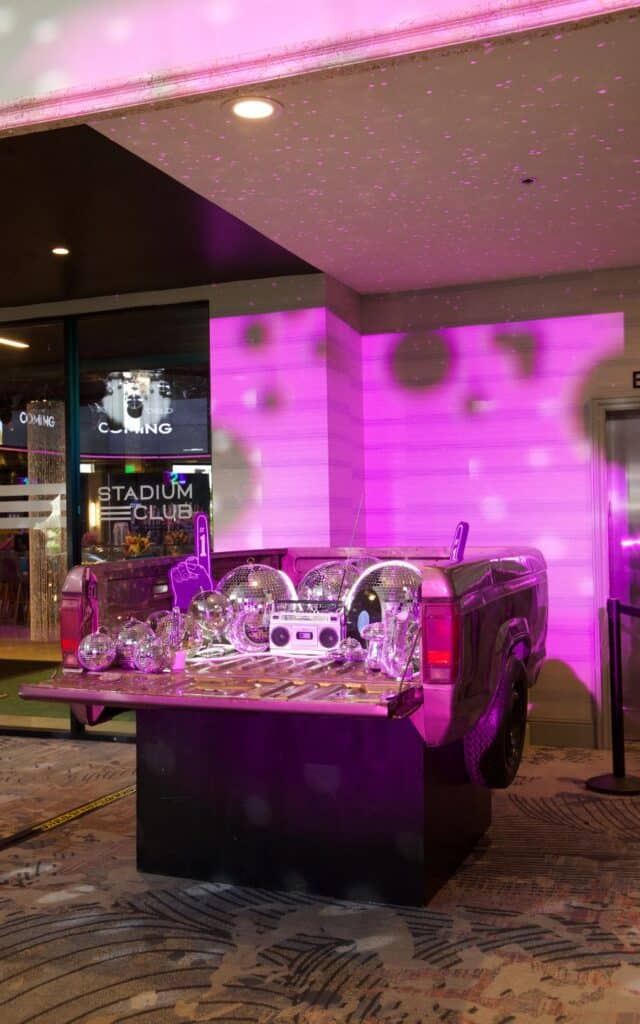
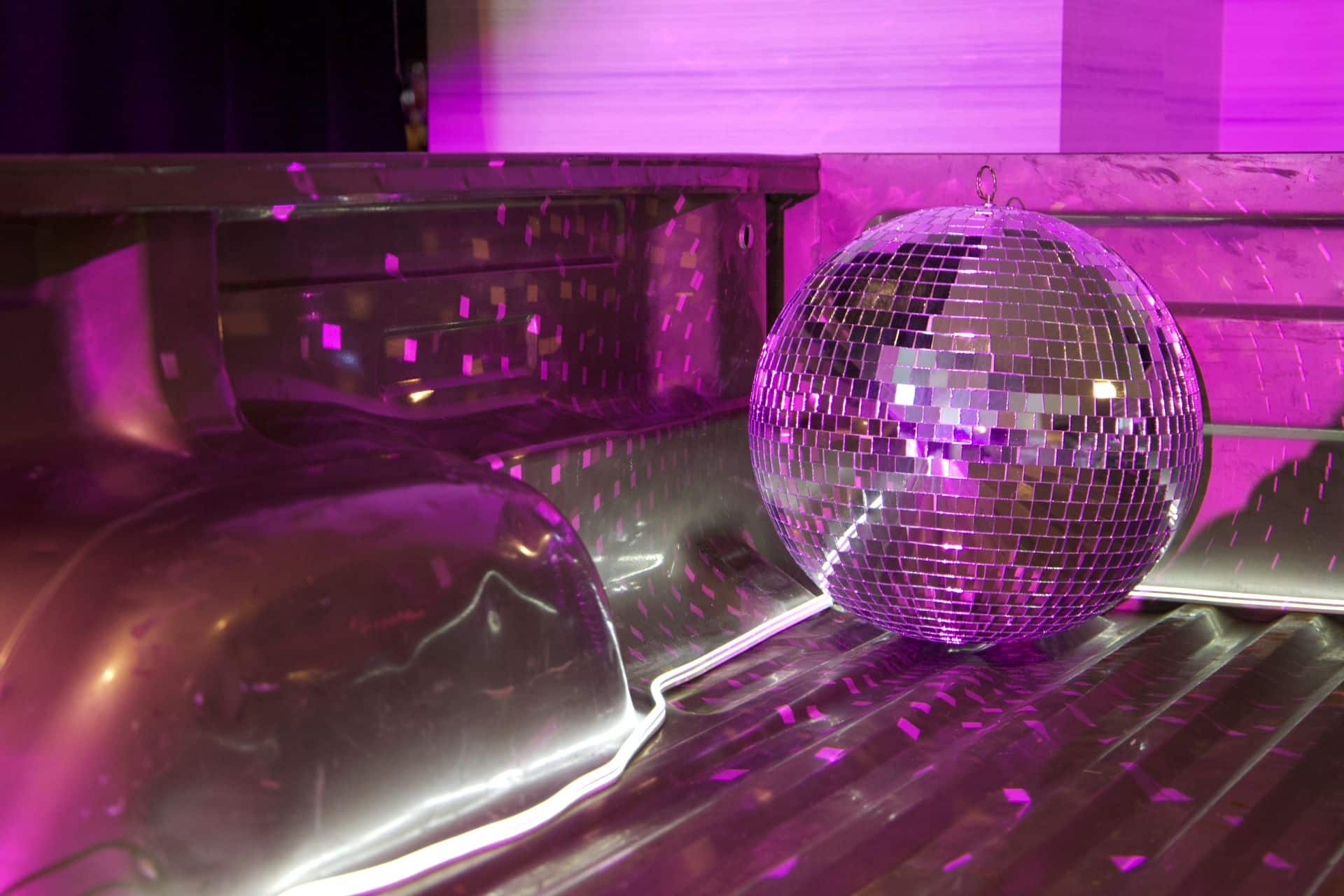
At Caribe Royale’s Stadium Club, Florida Event Decor reimagined the space in just seven hours with 14 disco balls, a custom tailgate buffet, and game-day-inspired decor. The disco balls added movement and reflected light throughout the space, while the custom buffet created a visual focal point where guests could gather, eat, and connect.
Rather than making the dining area feel separate from the rest of the event, the lighting and decor helped make food service part of the overall experience.
Design goal: Create a comfortable dining environment that keeps guests connected to the event's energy and design.
4. Focus Attention During Presentations and Awards
The atmosphere changes again when a keynote, awards program, speech, or presentation begins.
Guests now need to focus.
Lighting can make that transition immediately apparent by directing attention toward the stage, speaker, screen, or presentation area. The rest of the room can remain visible without competing for attention.
This is especially important for corporate events, where the environment needs to remain engaging without distracting from the program.
At the Eagle Awards Gala 2026, lighting was integrated with the surrounding structures and installations rather than treated as a separate element. The result was a cohesive environment that could still shift attention toward the program.
Design goal: Give guests a clear visual cue about where to direct their attention.
5. Increase Energy When the Celebration Begins
Once formal programming ends, the atmosphere can shift.
A sophisticated dinner environment can become a lively celebration without requiring the entire venue to be redesigned. Stronger color, dynamic lighting, and focused illumination can make the dance floor, entertainment, and central scenic elements feel more energetic.
At a Carnival-themed reception at Caribe Royale in Orlando, Florida, Event Decor combined custom decor, scenic builds, glowing architectural features, and lighting to create a colorful environment centered on interaction and celebration.
Lighting can make the dance floor feel like the center of the room, emphasize entertainment, and bring scenic elements to life. LED furniture can add to the atmosphere when its illumination complements the surrounding design.
Design goal: Signal that it is time to celebrate, interact, move, and have fun.

Use Lighting to Guide Guest Attention
A well-designed event should make it easy for guests to understand what deserves their attention.
Accent lighting can establish focal points around:
- Stages
- Branded installations
- Product displays
- Bars and food stations
- Lounge areas
- Dance floors
- Photo opportunities
- Architectural features
Florida Event Decor used this approach for a magazine-style photo experience at Hyatt Regency Orlando, combining scenic fabrication, branded graphics, and accent lighting to create an environment that attracts attention and encourages guests to stop, pose, and take photographs.
In a large ballroom, strategic lighting can create visual destinations and give the room structure without requiring every surface to be decorated.

Use Uplighting to Transform the Character of a Room
Uplighting is one of the most versatile ways to change the appearance of an event venue.
Placed around a room's perimeter or near architectural features, uplights can introduce color, add depth, emphasize columns and walls, and connect the venue to the event's overall design.
The color palette can reinforce the event's purpose:
- Brand colors can strengthen corporate identity.
- Warm, sophisticated tones can support a gala or formal dinner.
- Bold colors can energize a celebration.
- Controlled color combinations can reinforce a themed environment.
At the Carnival reception at Caribe Royale Orlando, glowing architectural elements and lighting enhanced the event's colorful, energetic character.
A focused palette is easier to coordinate with furniture, decor, scenic elements, and branding than an uncontrolled mix of colors.
Design goal: Use lighting colors to strengthen the concept rather than compete with it.
Consider Color Temperature, Too
Choosing blue, amber, pink, or another color is only half of event lighting.
Color temperature also affects how a space feels.
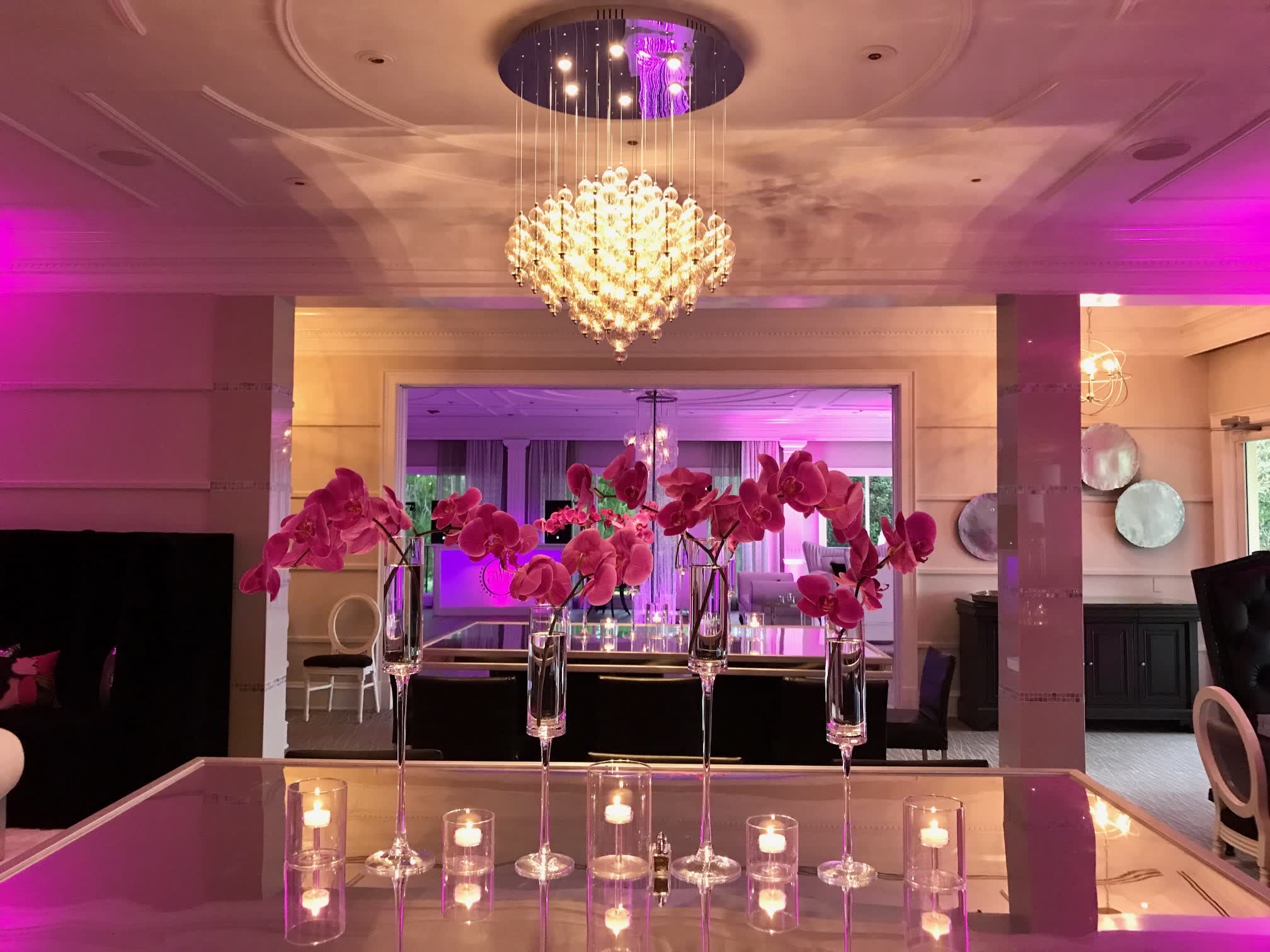
Warmer light can contribute to a welcoming, intimate atmosphere, while cooler light can create a cleaner, more contemporary feeling. The right choice depends on what guests are doing and what the environment needs to communicate.
For example:
- A lounge may benefit from warmer, softer illumination.
- A dining environment may require comfortable, flattering light.
- A presentation area may need brighter, focused illumination.
- A modern brand activation may benefit from a cooler, contemporary look.
The most effective choice is the one that supports both the visual design and the function of the space.

Coordinate Lighting With Furniture and Decor
Lighting works best when it is planned alongside the rest of the event environment.
Furniture determines where guests sit and gather. Decor establishes visual character. Scenic elements create focal points. Branding communicates identity. Lighting connects these decisions and changes how guests experience them.
The same lounge furniture can feel intimate under soft, warm illumination, theatrical under dramatic color, or contemporary under brighter light.
The physical environment stays the same while the atmosphere changes.

Common Event Lighting Mistakes to Avoid
Effective event lighting comes from deliberate decisions about where and how to light.
- Treating Lighting as an Afterthought
Waiting until the end of the planning process can create conflicts with furniture placement, decor, branding, scenic elements, and the event schedule.
Lighting should be considered when designing the overall environment.
- Using Too Many Colors
An uncontrolled color palette can compete with branding and decor.
Choose colors that support the concept and use them consistently throughout the space.
- Lighting Every Area the Same Way
Uniform illumination can make a large venue feel flat because every area has equal visual importance.
Different lighting levels can establish hierarchy, create zones, and guide attention.
- Ignoring the Event Schedule
The lighting that works for guest arrival may not work for dinner, presentations, or dancing.
Plan lighting transitions around the event's actual flow so each phase feels intentional.
Plan Lighting Around the Guest Journey
Once you've identified how the atmosphere should change throughout the event, use the guest journey to guide your lighting decisions. At each stage, ask:
- What should guests feel?
- Where should they look?
- What should they do?
These questions help turn lighting from a decorative element into a strategic part of event design.
Frequently Asked Questions About Event Lighting
Q: How does lighting affect the mood of an event?
Lighting influences how guests perceive and interact with a space. Warm lighting can create a welcoming or intimate atmosphere, while brighter, colorful, or dynamic lighting can make an environment feel more energetic. Changing the lighting throughout an event can also signal transitions between networking, dining, presentations, and celebration.
Q: What types of lighting are commonly used for events?
Common event lighting options include uplighting, ambient lighting, accent lighting, architectural lighting, stage lighting, and LED lighting. The right combination depends on the venue, event type, branding, decor, and desired guest experience.
Q: How can lighting make a large venue feel more intimate?
Lighting can divide a large room into visual zones without requiring physical walls. Softer illumination around lounge furniture, focused lighting over dining areas, and accent lighting around key installations can make a ballroom feel more purposeful and comfortable.
Q: What color lighting is best for corporate events?
There is no single best color for every corporate event. Brand colors can reinforce identity, while neutral, warm, or controlled color palettes can create a polished environment. The best choice depends on the company's branding, event purpose, decor, venue, and desired atmosphere.
Q: What is uplighting, and how is it used at events?
Uplighting is lighting positioned near the floor and directed upward toward walls, columns, architectural features, or scenic elements. It can add color, depth, and visual interest while helping connect the venue to the overall event design.
Q: Can lighting change the atmosphere during the same event?
Absolutely. Lighting can transition from warm and welcoming during arrival to softer during dinner, focused during presentations, and brighter or more colorful during the celebration. This allows one venue to support multiple experiences without requiring a complete room transformation.
Q: How should event lighting be coordinated with decor and furniture?
Lighting should be planned alongside furniture, decor, scenic elements, branding, and the event layout. The goal is to make these elements work together so that lighting highlights important areas without competing with the overall design.
One Venue Can Support Multiple Experiences
A thoughtful lighting plan can help a venue evolve with the event, from a welcoming arrival and comfortable networking environment to an elegant dinner, a focused presentation, and an energetic celebration.
Florida Event Decor combines lighting with furniture, decor, scenic elements, and event design to create cohesive environments for corporate events, galas, conferences, brand activations, themed celebrations, and other special events.
Planning an event in Florida? Contact Florida Event Decor to discuss your lighting and event-design needs.