Event production is the coordination of the technical, physical, visual, and live-show elements that ensure an event functions in real time. Audio, video, lighting, staging, rigging, power, scenic elements, show cues, and on-site execution must all support the same experience.
Why “Lights and Staging” Became Short for Production
That is why treating production as simply “lights and a stage” can leave important pieces of your event unplanned.
Lights and staging are among the most visible parts of an event, so they often become shorthand for production as a whole.
But the equipment guests see is only one part of the job.
Behind a conference presentation, for example, someone has to consider whether the audience can hear the speaker, whether the screen is visible from every seat, whether the lighting supports the presentation without washing out the image, whether cameras have a clear view, and whether the next presentation or video can be cued at the right moment.
The same principle applies to a gala, a product launch, an awards program, or a brand activation.
Production is what connects those individual pieces into one live experience.
What Event Production Actually Covers
The exact production scope depends on the event, venue, program, and audience. But several elements typically need to be considered together.
| Production element | Why it matters |
|---|---|
| Audio | Speakers, music, videos, and announcements need clear, appropriately balanced sound. |
| Video and projection | Presentations, branding, videos, cameras, and other content need to be visible and properly integrated. |
| Lighting | Lighting needs to support visibility, atmosphere, branding, presentations, and key moments without competing with them. |
| Staging and scenic | The stage has to support the program while fitting screens, speakers, branding, cameras, and audience sightlines. |
| Rigging and structural elements | Suspended or elevated elements must comply with venue requirements, access limitations, and structural considerations. |
| Power | Production equipment needs to work within the venue's available electrical infrastructure and event schedule. |
| Show flow and cueing. | Speakers, music, videos, lighting changes, presentations, and transitions need to happen at the right time. |
| On-site coordination | Someone needs to keep the different technical and creative requirements aligned before and during the event. |
Not every event needs every item. The requirements should be determined by the experience you are trying to create, not by a standard equipment checklist.

The Technical Problems Guests Notice Without Seeing the Cause
Audio
A microphone that cuts out is obvious. Less obvious are the planning decisions behind clear sound.
A conference may involve several speakers, walk-on music, video playback, audience questions, and announcements. If those elements are not considered together, transitions can become awkward, sound levels can be inconsistent, or a speaker can be difficult to hear.
For an event being recorded or livestreamed, the consequences can extend beyond the room.
Video and Projection
A screen is only useful if people can see what is on it.
Screen size, placement, stage configuration, audience sightlines, presentation content, and camera positions all influence the result. A scenic installation that looks excellent from the front may create a problem if it blocks a screen or restricts a camera angle.
The visual environment, therefore, has to be planned for both the people in the room and, when applicable, the people watching through a camera.
Lighting
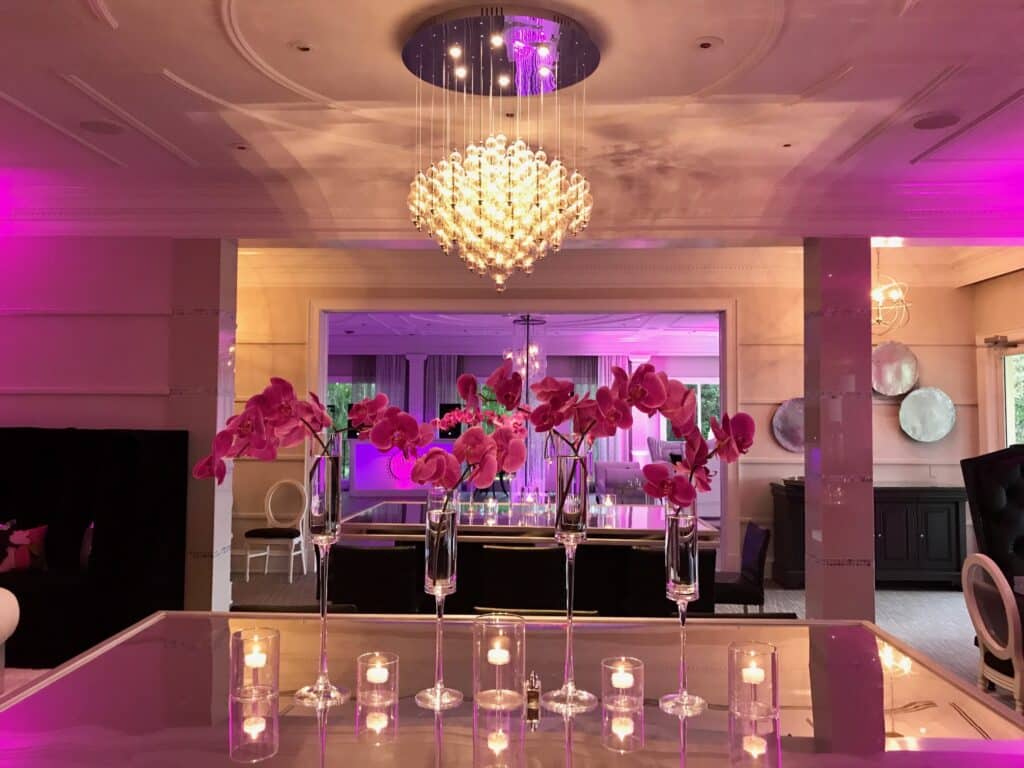
Lighting has two jobs: helping people see and helping the event feel the way it should.
A keynote may need clean, focused lighting. A product reveal may need a more dramatic change. A dinner or reception may call for a different atmosphere altogether.
Florida Event Decor offers event lighting as part of its broader decor capabilities, with lighting fixtures designed to enhance the look and atmosphere of corporate events, brand activations, and other experiences.
The important consideration is coordination. Lighting should enhance the stage, scenic environment, branding, and program rather than compete with them.

Rigging and Power Belong in the Planning Conversation
Some of the most important production decisions are the ones guests never notice.
An overhead installation, large scenic element, lighting setup, or suspended display may depend on venue restrictions, access, structural requirements, and coordination with qualified technical specialists.
Power requires the same attention. Production equipment has to work within what the venue can support, when the equipment can be installed, and how the setup fits into the overall event schedule.
A design that works in a rendering still has to work in the venue.
That is why production conversations should begin before the final design is locked.

Show Flow Is Part of Production
A live event is a sequence of moments.
Consider an awards presentation:
- A presenter walks on stage.
- The microphone needs to be ready.
- The appropriate lighting needs to be in place.
- A name or presentation may appear on screen.
- Music may play during the transition.
- The next presenter needs to be ready.
None of those tasks is particularly complicated on its own. The challenge is making them happen at the right time.
That is where show flow, cueing, rehearsals, technical checks, and communication become important.
Good production makes transitions feel natural because the audience never has to think about what is happening behind the scenes.

Production vs. Decor
Event decor and event production are closely related but not the same.
Decor shapes the physical and visual environment. Production coordinates the broader technical and live-experience requirements.
Florida Event Decor provides corporate event decor, custom scenic fabrication, stage sets, branded environments, themed decor, furniture, lighting, and production-related capabilities that help these elements work together as one experience.
A custom stage set, for example, may need to accommodate screens, presenters, cameras, lighting, rigging, and other technical requirements while maintaining audience sightlines and fitting the venue.
The goal is to make sure the visual environment and technical requirements support each other from the start.
The Real Risk Is the Gap Between Vendors
Hiring separate specialists is not automatically a problem.
A planner may have a decor company, AV provider, venue team, staging supplier, and other specialists. The risk appears when each team plans its part without understanding how the other pieces affect it.
- A screen can conflict with scenic elements.
- A lighting position can interfere with a camera.
- A stage design can create a sightline problem.
- An installation can conflict with access to the venue.
- A transition can require coordination between audio, video, lighting, and presenters.
The issue is a lack of clear coordination between them.
Before hiring anyone, establish who is responsible for identifying these intersections and communicating them to the relevant teams.

What to Ask Before Hiring a Production Partner
Before comparing production proposals, ask:
1. What exactly is included?
Ask the vendor to define its production scope rather than assuming “production” means the same thing to everyone.
2. Who coordinates with the venue and other vendors?
You want to know who is checking access, installation requirements, sightlines, technical conflicts, and timing.
3. How will the design work with audio and video?
A stage or scenic concept should account for screens, speakers, cameras, presentations, and the audience's view.
4. Who manages show-day coordination?
Find out who handles technical checks, transitions, cues, and communication during the program.
These questions can reveal gaps before they become event-day problems.

Start With the Experience
The best production plan starts with the experience you want to create.
Think about what the audience needs to see and hear, which moments deserve emphasis, and how the room should support the program from one moment to the next. Consider whether presentations, videos, photography, or livestreaming will also shape the setup.
Once the experience is clear, the equipment requirements become easier to determine.
That approach helps you invest in what the event actually needs instead of paying for equipment simply because it looks impressive.
Frequently Asked Questions
Q: Does venue AV cover everything I need?
Not always. Confirm exactly what is included and whether you still need staging, lighting, video, technical staff, or show coordination.
Q: Can decor and production use separate vendors?
Yes. Just make sure responsibilities are clear and shared requirements (such as stage dimensions, screen placement, lighting, rigging, and installation timing) are coordinated.
Q: What happens when production is planned too late?
You may face limited equipment options, tighter setup windows, venue conflicts, or costly last-minute changes. Early planning gives you more flexibility.
Q: How much can production add to my event budget?
It depends on your scope. Factor in equipment, labor, technical staff, setup and strike, transportation, rigging, power, and venue requirements.
Q: What should I give a production partner?
Share your venue, event type, guest count, agenda, key moments, presentation or video needs, branding, and venue restrictions. Your production partner can help identify the remaining technical details.

Production Should Make the Event Feel Effortless
Your guests should be focused on the keynote, not the microphone, screen, or technical setup.
They should remember the environment, the message, and the experience.
The visible equipment is only part of the job. The real value lies in ensuring the technical, visual, physical, and live elements support the same experience.
Ready to build an event where the visual environment works with the production plan? Bring us your event concept, venue details, and production requirements. Florida Event Decor can help you determine the scenic, lighting, branding, furniture, and fabrication elements needed to bring the experience together.