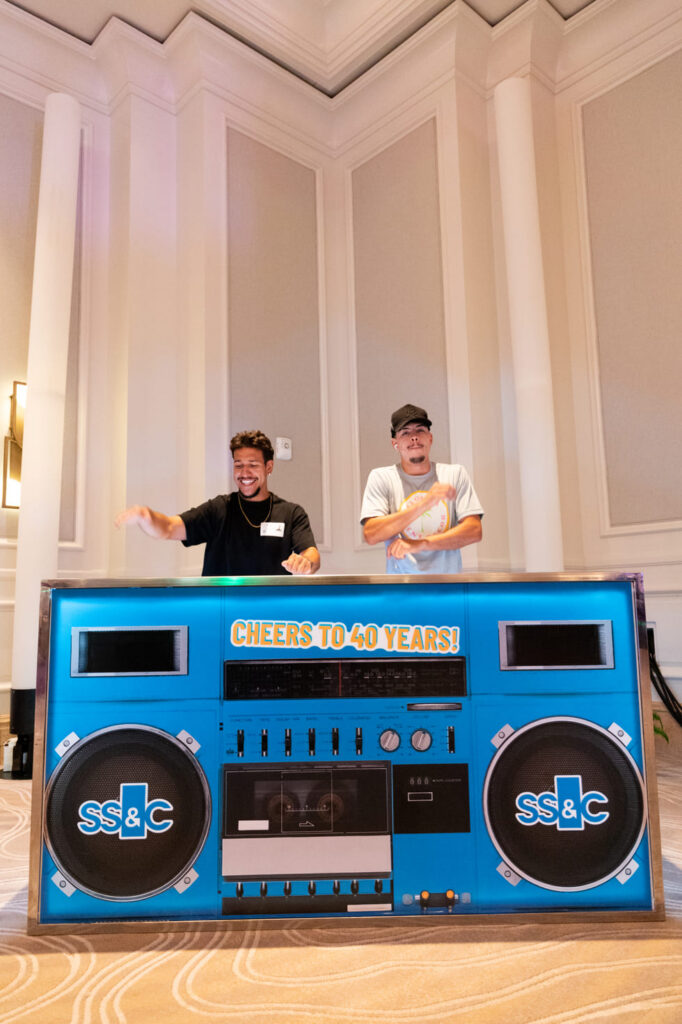
Why do guests remember one event long after it ends but struggle to recall another? Often, they remember a few defining moments: a striking scenic reveal, an unexpected installation, or a meaningful ending. Understanding event psychology helps corporate planners design these moments deliberately, so guests leave with something distinctive to recall.

Why Some Event Moments Stay With Guests
Guests experience an event as a sequence of moments, but they do not necessarily remember every moment equally. A presentation, dinner, networking session, and closing address may all serve a purpose, yet one experience often becomes the story guests tell afterward.
This is where event psychology becomes useful. Rather than adding more features to an event, planners can identify the moment that best expresses its purpose and build the creative concept around it.
Consider a hypothetical corporate sales kickoff introducing a new company direction. A room filled with branded materials might communicate the message, but a custom-built scenic reveal that brings that direction to life could give guests a moment they can picture and retell.
The goal is not to make every part of the event compete for attention. It is to make the important parts count.
Design One Defining Moment
A memorable event needs a clear focal point: a moment that gives guests a reason to look, react, or connect with the message.
That moment might be a custom stage reveal, a dramatic change to a scenic environment, or a branded photo installation that expresses the event's central idea. The right choice depends on what the audience needs to understand, feel, or remember.
Start with the message, then decide how the physical environment can communicate it.
- Product launch: Build a reveal around the product's most important feature or the problem it solves.
- Corporate anniversary: Use a custom scenic installation to represent the organization's history, achievements, or next chapter.
- Industry conference: Create a stage environment that reinforces the event's central theme.
- Brand activation: Develop a branded photo moment that gives attendees a tangible visual connection to the campaign.
Each feature should earn its place in the design. A large installation that looks impressive but has little connection to the event's purpose may attract attention without reinforcing the message.
The strongest concept gives the audience something to experience while clarifying why the event exists.

What the Peak-End Rule Tells Planners
Psychologist Daniel Kahneman's research on remembered experiences helped establish the peak-end rule. When people evaluate an experience retrospectively, its most intense moment and its ending can influence their overall assessment. The research looked at experiences such as medical pain, not at events, so it does not prove that a particular design will produce a particular memory.
For event planners, the principle offers a useful design consideration, not a guarantee that a particular moment or ending will shape how guests remember an event.
Think about the experience as a whole. Identify the moment that deserves the greatest emphasis, then consider how the event concludes. A well-executed highlight may give guests something to talk about, while a purposeful ending can bring the experience to a satisfying close.
This does not mean the rest of the event matters less. Poor execution, an unclear message, or a disappointing experience elsewhere can undermine an otherwise impressive moment.
Consider how the defining moment and the ending work together to reinforce the event's central message.

Give the Ending as Much Thought as the Reveal
Event endings often receive less creative attention than openings and headline moments. Yet the final presentation, closing announcement, or last planned interaction is an opportunity to reinforce the event's purpose.
A strong ending should feel intentional rather than abrupt.
For a corporate awards event, the final recognition could connect the evening's achievements to the organization's next goals. At a product launch, a closing visual could reinforce the product's central promise. At a leadership conference, the final address could bring the main ideas together and leave attendees with a clear next step.
The scenic environment can support that conclusion. Stage graphics, a final visual sequence, or a carefully planned change to the set may help reinforce the closing message when the production calls for it.
Plan this moment alongside the headline feature, not as an afterthought. Confirm what the audience should take away, how the program will deliver that message, and what the physical environment needs to do at that point.

Use Novelty With a Purpose
Something unexpected can distinguish an event from experiences guests have encountered before. But novelty alone is not a strategy.
A surprising installation, unusual scenic structure, or unexpected visual reveal works best when it relates to the event's identity. Without that connection, the feature risks becoming a distraction that guests remember independently of the message.
Ask three questions before approving a distinctive design element:
- What makes this feature different from what the audience is likely to expect?
- How does it reinforce the event's message or brand?
- Will guests understand its purpose without a lengthy explanation?
The answers help separate meaningful originality from decoration for its own sake.
Custom scenic fabrication offers planners greater control over dimensions, finishes, shapes, and branded details. That flexibility makes it possible to create an environment specific to the event rather than relying entirely on standard visual elements.
Explore our capabilities to see how custom scenic environments, stage sets, and branded installations can support an event concept.

Engage More Than Sight
Visual design is central to a scenic environment, but a memorable experience need not rely on appearance alone.
Sound, texture, and carefully selected sensory details can reinforce a concept when they have a clear purpose. A distinctive audio cue might accompany a reveal. A tactile finish might help communicate a product's material qualities. A subtle scent might support a carefully considered brand experience where it suits the audience and venue.
Restraint matters. Adding sensory elements simply because they are available can create competing signals rather than a stronger concept.
Consider accessibility, allergies, sensitivities, and venue restrictions before introducing scent or other sensory effects. Sound should support the program without interfering with speech or essential announcements.
Lighting can also reinforce a defining moment, provided it serves the concept rather than competing with it. See our guide to using lighting to create different moods for more on its role in an event environment.
The practical question is simple: does this detail strengthen the intended experience, or does it merely add another thing to notice?

Give Guests Something Worth Sharing
A shared moment can become part of how attendees remember and discuss an event. A visual reveal, a branded scenic installation, or a custom photo environment gives guests a natural subject to photograph and post.
Make the connection to the event clear. Incorporate brand elements, campaign messaging, or visual details that communicate the occasion without turning the entire environment into an advertisement. Placement and timing matter too: a photo moment should be available when the program allows guests to use it, without interrupting a presentation or becoming the main attraction at the expense of the event’s purpose.
For corporate planners and marketing leads, this is a chance to extend the event’s visual identity beyond the venue. Attendees may share photographs with colleagues or professional networks, giving the event additional visibility.

Make the Memorable Moment Work for the Event
A striking design is only successful when it supports the event's objectives.
A scenic reveal that blocks the audience's view, an installation that conflicts with the program, or an elaborate feature that obscures the message creates unnecessary problems. Creative ambition must work alongside production requirements.
Before finalizing the concept, confirm:
- Purpose: What should guests understand or remember?
- Program: At what point should the defining moment happen?
- Visibility: Can the audience see the feature from the intended viewing positions?
- Production: Can the design be fabricated, installed, operated, and removed within the venue's requirements and schedule?
- Brand alignment: Does the finished environment express the organization's identity and the event's message?
These decisions connect creative intent to practical execution. They also help planners prioritize the features that contribute most to the experience.
Florida Event Decor was founded in Orlando in 2008 and brings design, fabrication, installation, and accounting functions together under one roof. Our integrated approach supports the development of custom scenic environments, stage sets, and branded installations from concept through execution. Learn more about Florida Event Decor.
Frequently asked questions
What makes an event memorable?
An event becomes memorable when its defining moments connect with its purpose and give guests something meaningful to experience. A distinctive scenic reveal, an engaging presentation, or a purposeful closing moment can help communicate the event's message and give attendees something to recall afterward.
How does event design influence guest emotions?
Event design shapes the atmosphere in which guests experience a program. Lighting, scenic elements, color, sound, and spatial arrangements can influence how a setting feels and how attendees respond to it. When these elements support the event's message, they help create a more intentional experience.
Why is a focal point important in event design?
A focal point gives guests a clear visual or experiential center of attention. It helps direct attention toward an important message, presentation, product, or moment in the program. Without a clear focal point, competing design elements may distract from the event's main purpose.
Does the peak-end rule apply to virtual or hybrid events?
The underlying research concerns how people generally remember experiences, so the principle can also inform virtual and hybrid event planning. Evidence specific to event formats is limited. Give remote attendees a defining moment and a purposeful conclusion instead of relying entirely on the in-person experience.
Turn Event Psychology Into a Design Decision
Making an event memorable does not require a new feature in every corner of the venue. It requires a clear understanding of what the event needs to communicate and deliberate choices about how the audience will experience that message.
Memorable event design starts before the headline moment. Read our guide to first impressions at corporate events to learn how the opening experience shapes guests’ initial perceptions.
If you are developing a corporate event, product launch, conference, or brand activation, Florida Event Decor can help translate your creative direction into a custom-built environment.
Ready to develop an event concept your audience will remember? Contact us to discuss your project with our team.