Event uplighting uses floor-level fixtures to wash walls, columns, and draping with color. In a plain hotel ballroom or conference hall, it turns neutral surfaces into part of the event design. It introduces corporate brand colors, highlights architectural features, and gives large spaces greater visual definition.
What Is Event Uplighting?
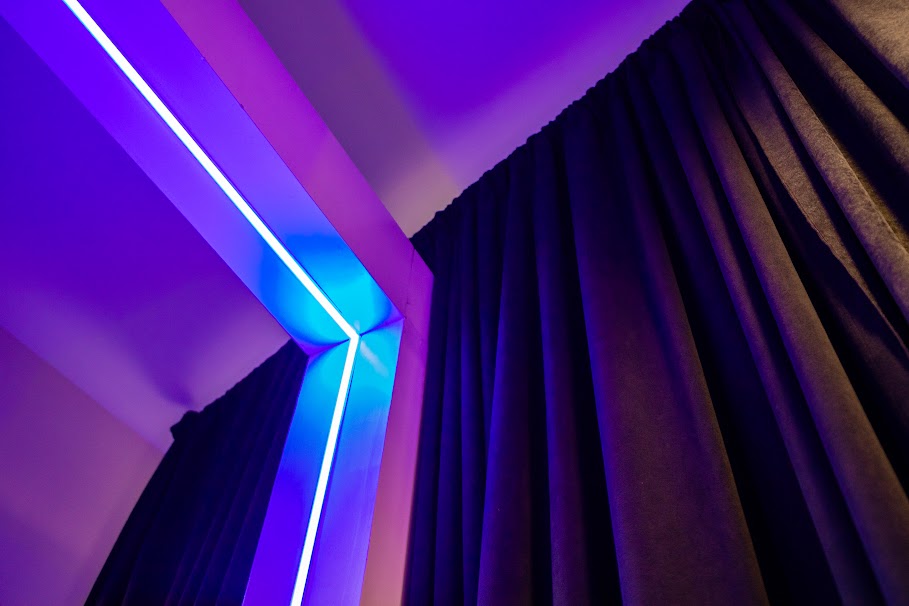
Uplighting uses fixtures positioned near the floor to direct light upward onto walls, columns, draping, and other vertical surfaces. Unlike overhead lighting, which illuminates the room, uplighting emphasizes its surfaces and architecture, turning them into part of the event backdrop.
LED uplights offer adjustable colors, making them useful for corporate events that incorporate brand colors into the venue design.
The result depends on fixture position, beam width, brightness, and the surface being illuminated. The same light can appear different on a smooth white wall, textured finish, or dark wood paneling.
Uplighting adds color and architectural definition, but it does not replace the lighting needed to illuminate speakers or make presentation screens visible. Those require separate lighting considerations.
What Uplighting Changes in a Room
Plain walls get depth. Hotel ballrooms are usually neutral, which is great for flexibility and bad for personality. A continuous wash of color gives a long wall presence. Individual fixtures create distinct pools of light instead. Which one suits you depends on the wall and the look you want.
Columns stop being obstacles. Lighting the base of a column draws the eye up and makes it a feature instead of something guests walk around. You don’t need to light every surface. Focus on the ones that frame the stage, flank the entrance, or show up in photos.
Large rooms feel defined. A big conference hall can feel unfinished when its edges fade into darkness. Color along the perimeter sets visual boundaries without any physical dividers.
As a hypothetical example, a sales kickoff could use one consistent color around the ballroom walls and a different treatment around the stage. Guests would read the stage as the focal point without a single partition.
Using Your Brand Colors
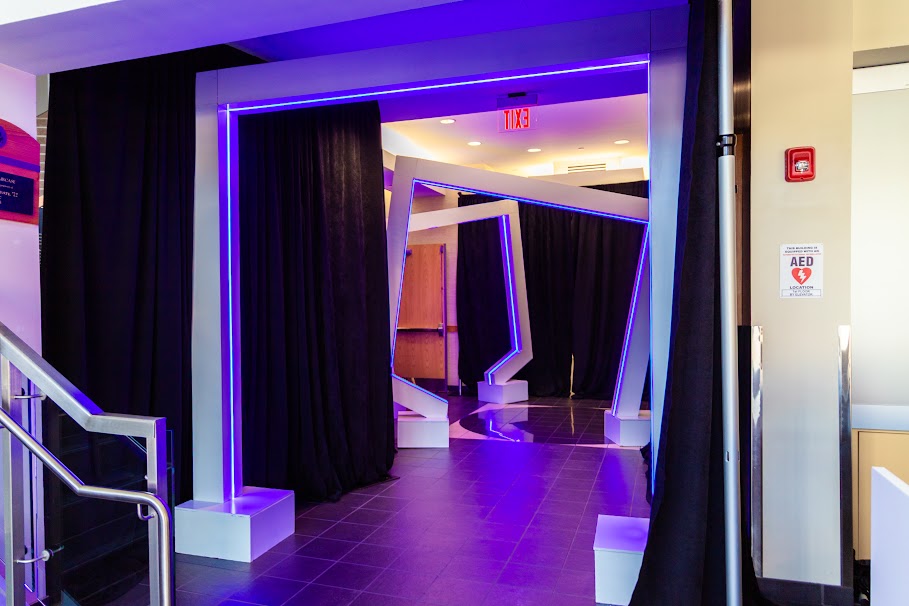
Corporate branding doesn’t have to stop at the logo and the signage. LED event lighting lets you adjust color, so the room itself can reflect your identity.
A simple way to plan it:
- Primary brand color
- Use it on selected walls or columns to set the theme.
- Secondary color
- Add it sparingly so it complements the primary color instead of fighting it.
- Neutral or restrained tones
- Use these where the program needs a calmer look, such as presentation areas.
- Stage surroundings
- Match the wall color to the scenic backdrop so they read as one environment.
One caution: a color that looks right in your brand guide can look different on a beige wall, a dark panel, or a colored drape. Ask to review the proposed color against the actual finishes before installation.
Florida Event Decor offers individual uplights, uplights with plugs, atmospheric uplighting packages with 30 color-adjustable lights, and truss lighting with six wireless uplights on a 13-foot truss stick.

Keeping the Stage Clear
Three kinds of lighting do three different jobs. Keeping them separate protects your speakers and your screens.
| Lighting type | What it does |
|---|---|
| Uplighting | Adds color to walls, columns, and architecture |
| Stage wash | Lights speakers and the presentation area |
| Accent lighting | Highlights selected scenic details |
Strong, saturated color aimed at a projection screen can wash out what’s on it. Keep wall color restrained near the screen and let the stage have its own dedicated light.
We design and build custom stage sets and scenic environments in our Orlando shop, so we plan the walls and the stage together. You can see our Event Lighting Design in Orlando, FL services for more.

Planning Lighting Around the Event Schedule
Many corporate events use one room all day: registration, presentations, then a reception. Your lighting should move with the program.
During daytime sessions, daylight and house lights may already do most of the work, so keep uplighting subtle. As evening comes, the same color can become more prominent. If you want different settings at different times, decide that early. Confirm which fixtures can be adjusted, how, and who handles the changes.
For more on shifting a room’s feel, see Using Lighting to Create Different Moods in One Venue.

Wired or Wireless Uplights?
Wired uplights need outlets, so placement depends on where the venue has power and where it allows cables to run.
Wireless uplights are easier to place around columns and perimeters, or anywhere cables would get in the way of guests. They still have operating requirements, so confirm those.
We offer uplights with plugs and truss lighting with six wireless uplights. The right choice depends on your room, not on a universal rule.

What to Ask Your Venue
Send the venue’s floor plan and technical rules to your lighting provider before you approve a layout. Then confirm:
- Power
- Where are the approved outlets, and are there restrictions?
- Cable routes
- Which areas must stay clear for guests?
- Placement
- Can equipment go near walls, columns, drapes, or exits?
- House lights
- Which ones stay on during presentations, and which can be dimmed?
- Load-in and strike
- What are the approved times?
- AV coordination
- How will uplighting work with projection, screens, and stage lighting?
If you’d like a second set of eyes on a floor plan, you can request a proposal, and we’ll review it with you. Planning an event in Tampa? See our Event Lighting Design in Tampa, FL page.

When Uplighting Isn’t the Answer
Uplights wash a surface with color. They don’t do everything.
- Speakers need stage lighting. Uplighting won’t make a presenter visible.
- Screens need their own planning. Content visibility is a separate question.
- Logos and patterns need a gobo. If you want your logo projected on a wall, that’s a gobo projection. An uplight can’t make precise graphics.
Decide what the light needs to accomplish first, then choose the fixture.
Frequently asked questions
Will uplighting affect event photography?
It can. Colored light bounces off walls and onto people and surroundings. Tell your photographer the planned colors and any changes during the program so they can adjust.
Can uplighting work on draped walls?
Yes. It can bring out the folds and texture of drapery. Fabric color, thickness, and finish change the result, so check the proposed color against the actual material.
Should every wall be uplit?
No. Prioritize the surfaces that shape the room’s look: the stage-facing wall, selected columns, or the main perimeter. Leaving other surfaces unlit often looks more deliberate.
What should I send for a proposal?
The venue name, event date, floor plan or room dimensions, guest count, schedule, and brand color references. Photos of the venue and inspiration images help too.
Plan Your Uplighting With Us
Good uplighting does more than add color. It brings your venue’s architecture into the design, carries your brand into the room, and works alongside the stage instead of competing with it.
Planning a conference, awards gala, or corporate event? Tell us about your venue and what you want the room to feel like. Request a Proposal for a free, no-obligation quote. We reply within one business day. Or call 407-574-4323, Monday through Friday, 9 a.m. to 5 p.m. ET.