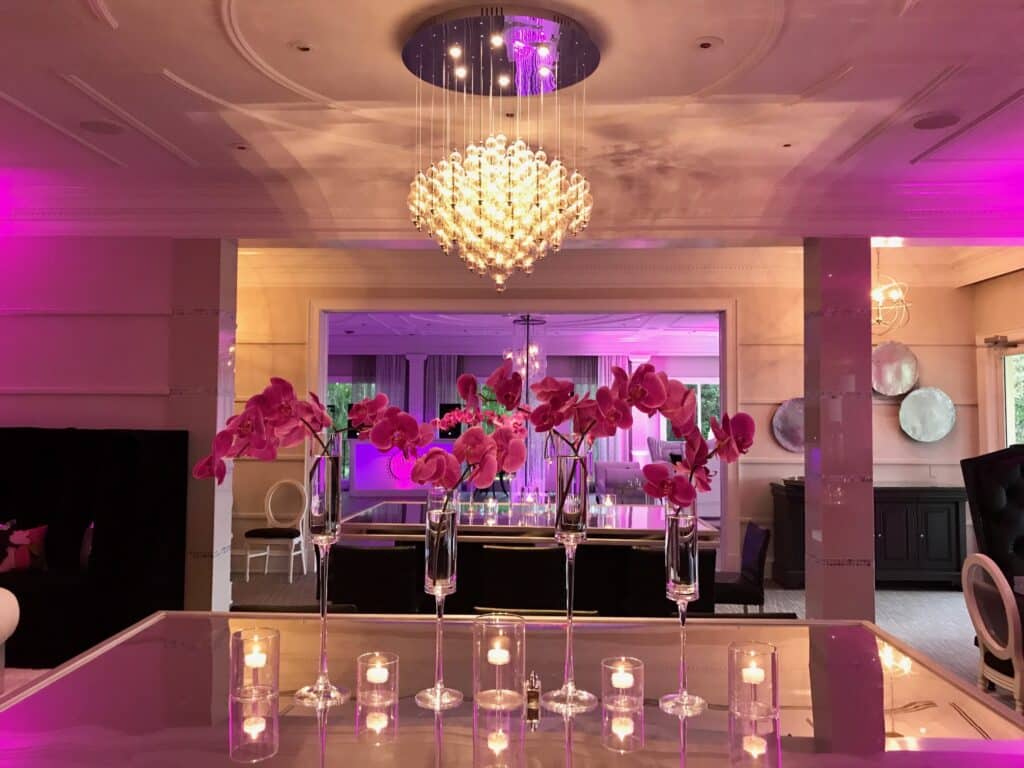
Thoughtful choices in layout, lighting, screens, backdrop, and branding create a presentation environment that supports communication rather than competing with it.
For corporate meetings, conferences, product launches, award programs, and other live events, effective stage design helps presenters communicate clearly, keeps important content visible, reinforces your brand, and gives attendees a more engaging experience.
What Effective Stage Design Should Accomplish
| What Better Stage Design Does | What It Means for Your Event |
|---|---|
| Keep the speaker visible | Attendees can see and follow the presenter from across the room |
| Make content easy to see | Presentation screens and visuals remain clear and easy to follow |
| Guide audience attention | The speaker, message, product, or key moment gets the focus |
| Support the full program | Keynotes, panels, demonstrations, awards, and Q&As can happen comfortably |
| Strengthen your brand | Your event has a polished, recognizable visual presence |
| Work with the venue | The stage and surrounding spaces feel like one cohesive experience |
| Look polished on camera | Your event translates well to photos, video, livestreams, and social content |
Why Does Stage Design Matter for Presentations?
The stage is one of the first things attendees notice, so it immediately shapes how they experience the presentation.
A well-planned stage creates a clear visual focal point, keeps the speaker and content easy to see, and gives the program enough space to function naturally. It should support what happens on stage rather than forcing presenters to work around the design.
The best stage design combines visual impact with practical function, so the environment looks intentional and helps the presentation work better.

How Does Stage Design Influence Audience Attention?
Start by deciding what you want attendees to notice first. Your stage should make that priority obvious rather than asking the audience to sort through competing visual elements.
Depending on the event, that may be:
- The speaker
- Presentation content
- A product or announcement
- A panel discussion
- An award or recognition moment
- The event brand
Once you've identified what matters most, the stage should support it. Screens, lighting, scenic structures, graphics, colors, and decorative elements should reinforce the main focus rather than compete with it.
For example, a product launch may place the product at the center of the experience, while a keynote may prioritize the speaker and presentation content. An awards program may give greater visual emphasis to the presenters and recipients.
The goal is to make sure the right element gets noticed first.

How Should You Design the Stage Around the Speaker?
Begin with the speaker’s position and build the stage around how they will actually use the space.
- Keep the speaker visible. Stage height, lighting, speaker position, and the backdrop should work together to keep the presenter visually distinct and easy to see.
- Allow room to move. Keynote speakers may move across the stage, interact with presentation content, demonstrate a product, or share the space with other presenters. The layout should provide enough usable space for those activities.
- Position presentation elements carefully. Screens, podiums, furniture, and scenic elements should support the speaker without blocking them or making the presentation difficult to follow.
- Plan for multiple speakers. Panels, interviews, and group presentations need enough space for people to sit, stand, interact, and move comfortably. Furniture should be appropriately scaled and positioned so it supports the speakers without reducing usable stage space or sightlines.
When the stage is designed around the people using it, speakers can present more naturally, and audiences can see and follow the action more easily.

How Does Lighting Support Presentation Focus?
Effective stage lighting keeps speakers visible, supports audience focus, and helps presentation content remain clear without creating glare, shadows, or visual distractions.
Lighting can be adjusted to support different moments throughout an event. A keynote may need focused light on the speaker, while a product reveal, panel discussion, or transition between sessions may call for a different lighting treatment.
Lighting can also reinforce the event’s visual identity by complementing brand colors and highlighting important scenic elements.
Lighting also needs to work beyond the room itself. An overly bright backdrop can compete with presentation screens, poorly positioned fixtures can create shadows or glare, and lighting that looks good in person may not translate well to photography, video, livestreams, or social content.
Good lighting supports both the live presentation and the visual content your event produces afterward.

How Can Branding and Visual Hierarchy Strengthen a Presentation Stage?
A well-branded stage creates a recognizable visual environment that reinforces your message in the room and in the photos, video, livestreams, and social content produced around the event.
Branding can appear through:
- Logos and brand colors
- Scenic backdrops
- Printed graphics
- Custom-built elements
- Presentation screens
- Lighting
- Podiums and furniture
The key is using these elements strategically. Too much branding can make the stage feel crowded and compete with the speaker or presentation content. The goal is to make the brand visible without making it the only thing the audience sees.
A branded backdrop can reinforce your organization’s identity while keeping the speaker and screens easy to see. Lighting, scenic elements, and furniture can support that focal point rather than compete with it.
The result is a stage that strengthens brand recognition while keeping the presentation itself clear, intentional, and easy to follow.

How Should Stage Design Support the Entire Event?
A well-planned stage helps your entire event feel connected, supports different program moments, and creates a polished experience for attendees and cameras alike.
Corporate events rarely involve just one presentation. A program may move from a keynote to a panel discussion, product demonstration, awards presentation, interview, or audience Q&A. The stage should be flexible enough to support those changes without awkward resets or disrupting the overall look.
Consistency matters beyond the stage, too. The stage, entrance, seating areas, lighting, furniture, branding, and surrounding decor should feel like parts of the same experience rather than separate design decisions.
Florida Event Decor’s Ascend 2026 event demonstrates this approach. The space-inspired design carried a consistent visual direction across the ballroom, foyer, and Olympic areas, using coordinated scenic elements, illuminated features, interactive installations, and lounge environments to connect the guest experience.
For your event, consider:
- Flexible layouts
- Leave enough space for speakers, panels, demonstrations, awards, and other program elements.
- Consistent visual elements
- Carry key colors, materials, branding, lighting, and scenic details throughout the event.
- Adaptable components
- Use furniture, screens, and scenic elements that can support different parts of the program without disrupting the overall design.
- Camera-ready design
- Plan speaker backgrounds, branding placement, lighting, and sightlines so the event looks polished in photos, video, livestreams, and social content.
When the stage and surrounding environment work as one, transitions become easier, the event feels more cohesive, and every space supports the same experience.

What Stage Design Mistakes Should You Avoid?
Avoiding common stage design mistakes can improve speaker visibility, audience sightlines, presentation flow, and the overall event experience.
A stage can look impressive and still create problems once the event begins. Before approving the design, check for these common issues:
- Blocking the Speaker
Large scenic pieces, screens, furniture, or decorative elements can obstruct the presenter and make it harder for attendees to follow the presentation.
Better approach: Position every major element around the speaker’s sightline and actual position on stage.
- Designing for Only the Best Seat
A stage may look perfect from the center while creating poor views from the sides or back of the room.
Better approach: Check sightlines across the entire seating plan so important content remains visible throughout the room.
- Letting Branding Compete With the Message
Too many logos, graphics, or branded surfaces can make the stage feel crowded and pull attention away from the speaker or presentation.
Better approach: Use branding strategically in the locations where it will have the most impact.
- Treating Lighting as Decoration
Lighting that looks dramatic but creates shadows, glare, or poor visibility can work against the presentation.
Better approach: Coordinate lighting with speaker positions, screens, scenic elements, photography, and video.
- Designing for Only One Program Moment
A stage built around a keynote may not have enough space or flexibility for a panel, product demonstration, awards presentation, or audience Q&A.
Better approach: Plan the stage around the full program so transitions are easier and the environment remains functional throughout the event.
- Adding Elements Without a Purpose
More scenery does not automatically create more impact. Unnecessary elements can add cost, clutter, and distractions without improving the audience experience.
Better approach: Make sure each major element serves a clear purpose: communication, branding, functionality, atmosphere, or audience experience.
The best stage design helps your event work better while giving the audience a clear, engaging experience.
Frequently Asked Questions
How far in advance should stage design be planned?
Stage design should be considered early enough to coordinate the venue, AV, lighting, branding, fabrication, furniture, and installation requirements. More complex builds may require additional time for concept development, approvals, fabrication, logistics, and on-site installation.
Can stage design be customized for an unusual venue?
Yes. Custom stage design can be adapted to different room dimensions, ceiling heights, architectural features, audience layouts, and existing venue conditions. The goal is to create a stage that works with the space rather than forcing a standard setup into it.
How much does custom stage design cost?
There is no single price for custom stage design. Cost can vary based on stage size, scenic complexity, materials, fabrication, lighting, technology, branding, labor, installation, and the venue. Defining the event requirements early makes it easier to establish an appropriate scope and budget.
What information should I provide when planning a custom stage?
Useful starting details include your venue, event type, audience size, stage dimensions, program requirements, branding, presentation technology, desired look, and installation timeline. Sharing these details early helps determine the right stage layout, scenic elements, equipment, and production requirements for the space.
Can one stage support different types of presentations?
Yes. A stage can be planned with flexibility in mind so it can accommodate keynotes, panels, demonstrations, interviews, awards, and other program elements. Modular scenic pieces, movable furniture, adaptable screens, and flexible layouts can make transitions easier without requiring an entirely different stage.
What is the difference between a standard stage and a custom stage?
A standard stage typically relies on readily available components and established configurations, while a custom stage is developed around the event's specific space, visual identity, program, and functional requirements. Customization can be particularly useful when an event needs a distinctive environment or has requirements that a standard setup cannot easily accommodate.

Plan a Stage That Works for Your Event
Your stage should help your audience see the speaker, follow the presentation, recognize your brand, and experience the event as one cohesive environment.
Florida Event Decor creates custom stages and scenic environments around your program, audience, brand, venue, and presentation needs. Custom scenic structures, branded backdrops, dimensional elements, lighting, furniture, and integrated features can support everything from keynote presentations and panels to product launches, awards programs, and corporate events.
The result is a stage that works for your program, strengthens your visual identity, and looks intentional both in the room and on camera.
Planning a corporate presentation, conference, product launch, gala, or other live event? Contact Florida Event Decor to discuss a custom stage environment built around your event.